Search This Page

Showing posts with label Headlines Science. Show all posts

Thursday, August 4, 2022

Cheating Death: Yale Scientists Restore Cell, Organ Function in Pigs After Death

August 4, 2022

Illustration of organ perfusion and cellular recovery with OrganEx technology. The cell-saving blood analog is delivered to vital organs one hour after death. Credit: Marin Balaic

Yale-developed technology restores cell and organ function in pigs after death, a potential organ transplant breakthrough.

Within just minutes of the final heartbeat, a cascade of biochemical events triggered by a lack of blood flow, nutrients, and oxygen begins to destroy a body’s cells and organs. However, a team of researchers at Yale University has discovered that massive and permanent cellular failure doesn’t have to happen so quickly.

Using a new technology the scientists developed that delivers a specially designed cell-protective fluid to organs and tissues, the team restored blood circulation and other cellular functions in pigs a full hour after their deaths. They report their findings in the August 3 edition of the journal Nature.

Their results may help extend the health of human organs during surgery and expand the availability of donor organs, the authors said.

All cells do not die immediately, there is a more protracted series of events,” said David Andrijevic, associate research scientist in neuroscience at Yale School of Medicine and co-lead author of the study. “It is a process in which you can intervene, stop, and restore some cellular function.”

The research builds upon an earlier Yale-led project that restored circulation and certain cellular functions in the brain of a dead pig with technology dubbed BrainEx. Published in 2019, that study and the new one were led by the lab of Yale’s Nenad Sestan, the Harvey and Kate Cushing Professor of Neuroscience and professor of comparative medicine, genetics, and psychiatry. The new study involved senior author Sestan and colleagues Andrijevic, Zvonimir Vrselja, Taras Lysyy, and Shupei Zhang, all from Yale.

If we were able to restore certain cellular functions in the dead brain, an organ known to be most susceptible to ischemia [inadequate blood supply], we hypothesized that something similar could also be achieved in other vital transplantable organs,” Sestan said.

In the new study, the scientists applied a modified version of BrainEx called OrganEx to the whole pig. The technology consists of a perfusion device similar to heart-lung machines — which do the work of the heart and lungs during surgery — and an experimental fluid containing compounds that can promote cellular health and suppress inflammation throughout the pig’s body. Cardiac arrest was induced in anesthetized pigs, which were treated with OrganEx an hour after death.

Six hours after treatment with OrganEx, the researchers found that certain key cellular functions were active in many areas of the pigs’ bodies — including the heart, liver, and kidneys. Additionally, some organ functions had been restored. For instance, they found evidence of electrical activity in the heart, which retained the ability to contract.

We were also able to restore circulation throughout the body, which amazed us,” Sestan said.

Normally when the heart stops beating, organs begin to swell, collapsing blood vessels and blocking circulation, he said. Yet circulation was restored and organs in the deceased pigs that received OrganEx treatment appeared functional at the level of cells and tissue.

Under the microscope, it was difficult to tell the difference between a healthy organ and one which had been treated with OrganEx technology after death,” Vrselja said.

As in the 2019 experiment, the scientists also discovered that cellular activity in some areas of the brain had been restored. However, no organized electrical activity that would indicate consciousness was detected during any part of the experiment.

The team was especially surprised to observe involuntary and spontaneous muscular movements in the head and neck areas when they evaluated the treated animals, which remained anesthetized through the entire six-hour experiment. These movements indicate the preservation of some motor functions, Sestan said.

Additional studies are necessary to understand the apparently restored motor functions in the animals, the researchers stressed. They also called for rigorous ethical review from other scientists and bioethicists.

The experimental protocols for the latest study were approved by Yale’s Institutional Animal Care and Use Committee and guided by an external advisory and ethics committee.

The OrganEx technology could eventually have several potential applications, the researchers said. For example, it could extend the life of organs in human patients and expand the availability of donor organs for transplant. It might also be able to help treat organs or tissue damaged by ischemia during heart attacks or strokes.

There are numerous potential applications of this exciting new technology,” said Stephen Latham, director of the Yale Interdisciplinary Center for Bioethics. “However, we need to maintain careful oversight of all future studies, particularly any that include perfusion of the brain.”

Reference: “Cellular recovery after prolonged warm ischaemia of the whole body” by David Andrijevic, Zvonimir Vrselja, Taras Lysyy, Shupei Zhang, Mario Skarica, Ana Spajic, David Dellal, Stephanie L. Thorn, Robert B. Duckrow, Shaojie Ma, Phan Q. Duy, Atagun U. Isiktas, Dan Liang, Mingfeng Li, Suel-Kee Kim, Stefano G. Daniele, Khadija Banu, Sudhir Perincheri, Madhav C. Menon, Anita Huttner, Kevin N. Sheth, Kevin T. Gobeske, Gregory T. Tietjen, Hitten P. Zaveri, Stephen R. Latham, Albert J. Sinusas and Nenad Sestan, 3 August 2022, Nature.
DOI: 10.1038/s41586-022-05016-1

The research was funded by the U.S. Department of Health & Human Services, National Institutes of Health, and National Institute of Mental Health.

This work was supported by the NIH BRAIN Initiative grants MH117064, MH117064-01S1, R21DK128662,T32GM136651, F30HD106694, and Schmidt Futures.
Tuesday, July 19, 2022

Source: ars technica

Two companies join SpaceX in the race to Mars, with a launch possible in 2024

"If it wasn't challenging, I wouldn't be doing it."

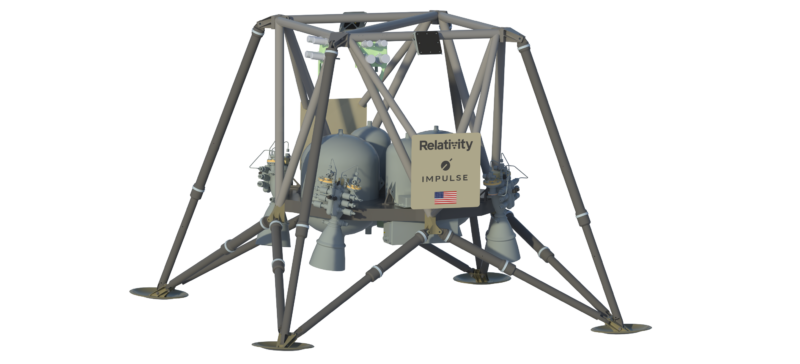
Here is a preliminary design of a Mars lander to be built by Impulse Space.

Relativity Space has not launched a single rocket, and Impulse Space has never tested one of its thrusters in space. Nevertheless, on Tuesday, the two California-based companies declared their intention to launch an ambitious mission that will land on the surface of Mars in fewer than three years.

This would be the first-ever commercial mission to Mars, and normally such a claim could be safely dismissed as absurd. But this announcement—audacious though it may be—is probably worth taking seriously because of the companies and players involved.

Founded in 2015, Relativity has raised more than $1 billion and should launch its small Terran 1 rocket later this year. The company, which seeks to 3D print the majority of its vehicles, is already deep into development of the fully reusable Terran R rocket. This booster is intended to be somewhat more powerful than SpaceX's Falcon 9 and would carry the commercial mission to Mars. Relativity plans to have the Terran R rocket ready to launch in 2024, with the Mars payload flying on its debut mission in the late 2024 window to Mars.

Impulse Space is newer, at less than a year old, but not without experienced engineers. The company was founded by Tom Mueller, the first employee hired at SpaceX and leader of its propulsion department for more than a decade. His engines power the Falcon 9, Falcon Heavy, and Dragon vehicles. Mueller considers launch a "solved problem" and is developing a line of non-toxic, low-cost thrusters to serve the in-space propulsion market.

"This is a whole new era of spaceflight, and we want to be positioned to provide reliable, low-cost, in-space propulsion," Mueller said in an interview with Ars. "We want to do it all—orbital, lunar, interplanetary."

The mission’s conception

The Mars mission was conceived last year when Relativity's vice president of engineering and manufacturing, Zach Dunn, reached out to Mueller. The two were old colleagues. Mueller had hired Dunn at SpaceX back in 2006, where the intern was soon put in charge of engine testing and then the overall propulsion system for the company's early Falcon rockets. Relativity wanted to make a splash with its first Terran R mission, and Mueller embraced the challenge.

The companies devised a mission in which the Terran-R vehicle would boost a Mars Cruise Vehicle developed by Impulse Space into a trajectory toward Mars. Upon reaching the red planet, the lander would separate from the cruise stage. This lander would leverage aeroshell technology developed by NASA for its Mars Phoenix lander and other vehicles and use the same entry velocity and angle as the NASA missions. The Impulse Space lander would then land propulsively under the power of four thrusters, similar in action to a quadcopter. With this mission design, Impulse plans to deliver tens of kilograms of scientific payload to the Martian surface.

Only NASA and China have ever sent missions to Mars that have landed successfully on Mars, and survived to conduct science.

"If it wasn't challenging, I wouldn't be doing it," Mueller said. "I always feel like if people aren't a little bit skeptical about what we're doing, we're not doing it right."

Relativity's chief executive and co-founder, Tim Ellis, echoed those words. He said he wanted to make a statement by putting a Mars-bound payload on the first launch of the Terran-R rocket. Ellis founded Relativity Space in part because he was inspired by what SpaceX and Elon Musk were trying to do in making humanity a multiplanetary species. This commercial mission, he said, would move the needle forward.

"We're big fans of SpaceX and Starship," Ellis said. "But there's got to be more than one company working at this. I want to be the second company that steps forward and says this is important. Hopefully there are many more."

Commercial Mars?

Relativity has signed an exclusivity deal with Impulse to work on this, and potentially other Mars missions, through 2029. While the first mission will be self-funded by the two companies, both Mueller and Ellis believe that NASA and private companies will be interested in a relatively low-cost, commercial capability to carry scientific payloads to the surface of Mars.

Previously, through initiatives such as the Commercial Lunar Payload Services program to have private companies deliver scientific payloads to the Moon, NASA has indicated a willingness to work with the private sector to conduct scientific missions on other worlds.

"It’s always great to see new players bringing new ways of doing business to the space sector," said Bobby Braun, head of space exploration at the Johns Hopkins University Applied Physics Laboratory and an industry leader in the study of Mars. "Initiatives like this grow the community and could pave the way to new approaches that accelerate the pace of space science and exploration."

The Terran R rocket is a two-stage, methane fueled rocket. With both the first and second stages returning, it is capable of lifting 20 metric tons to low Earth orbit. In a fully expendable mode, as it would be for Mars missions, Terran R can send 35 metric tons into low Earth orbit. Ellis acknowledged that a 2024 target for launching such a large rocket, with 3 million pounds of thrust at launch, is aggressive. But it's doable, he added, with development work on Aeon-R main engines progressing well.

Orion-inspired

Impulse Space has been testing space thrusters that provide a less toxic alternative to the hypergolic fuels such as hydrazine typically used by spacecraft. Mueller said his company's propulsion system is based on a propellant mix of ethane and nitrous oxide, which is storable and cost-effective. The company plans to perform an in-space demonstration in 2023, likely providing "last mile" services for a small satellite.

In less than a year since its founding, Impulse has grown to 40 employees. Mueller's favorite constellation is Orion, so he has named the company's first spacecraft after that. Impulse's larger in-space thrusters are named Rigel, after the brightest star in the constellation; and the smaller thrusters are named Saiph, one of the fainter stars.

"They're super safe," Mueller said of Rigel and Saiph. "They're non-toxic, non-corrosive, and self pressurizing. And so there's just very little safety cost around them that you have around hypergols or peroxide. It's not the most ideal high-performance propellant, but we're optimizing for cost."

Friday, July 15, 2022

Source: NY Times

In Space, U.S.-Russian Cooperation Finds a Way Forward


July 15, 2022


By Kenneth Chang and Anton Troianovski
An image released by Roscosmos of Anna Kikina, a Russian astronaut who will join American astronauts on the next SpaceX mission to the International Space Station.

When SpaceX next launches a Falcon 9 rocket to the International Space Station, one of the astronauts aboard will be Russian.

NASA and Roscosmos, the Russian space agency, announced on Friday that they had reached an agreement that would give Russian astronauts seats on American-built spacecraft in exchange for NASA astronauts’ getting rides to orbit on Russian Soyuz rockets.

Also on Friday, Russian president Vladimir V. Putin signed a decree dismissing Dmitry Rogozin, who since 2016 had led Roscosmos, the state corporation that oversees Russia’s space activities.

Russians and Americans in orbit have sustained their close cooperation despite the fracturing of ties between the two countries after Russia’s invasion of Ukraine in February. The relationship also endured Mr. Rogozin’s repeated belligerent pronouncements in the Russian news media and on his Twitter and Telegram accounts.

In April, Mr. Rogozin demanded that economic sanctions against Russia be lifted and said that he had submitted a proposal urging the Russian government to leave the space station.

This week, after the European Space Agency formally pulled out of a collaboration with Russia on sending a robotic rover to Mars, Mr. Rogozin said Russian astronauts on the space station would stop using a robotic arm built by the Europeans and lobbed disparaging words at Josef Aschbacher, the director general of the European Space agency, and Josep Borrell Fontelles, a top European Union foreign policy official.

“I, in turn, give a command to our crew on the ISS to stop working with the European ERA manipulator,” Mr. Rogozin wrote on his Telegram channel. “Let Aschbacher himself and his boss Borrell fly into space and do at least something useful in their lives.”

Dmitri S. Peskov, the Kremlin’s spokesman, insisted that the move had nothing to do with Mr. Rogozin’s performance and promised that the former director would soon be employed again.

“This is not connected with any issues,” Mr. Peskov said Friday, according to the Russian state news media. “In due time, Rogozin will be employed and will start a new job.”

Mr. Rogozin’s successor will be Yuri Borisov, who takes over Roscosmos after his own ousting as the deputy prime minister overseeing Russia’s military industrial complex. Mr. Borisov is a longtime government official who also previously served as a deputy defense minister. Unlike Mr. Rogozin, he is not known for being a firebrand in public.

NASA officials have been steadfast in insisting that operations on the space station remain normal, usually letting Mr. Rogozin’s comments pass without comment.

Last week, however, NASA put out a statement rebuking Russia after Roscosmos distributed photographs of the three Russian astronauts on the space station holding the flags of pro-Russia separatists in two provinces of Ukraine.

On Friday, NASA resumed highlighting the cooperation.

Flying integrated crews ensures there are appropriately trained crew members on board the station for essential maintenance and spacewalks,” NASA said in a statement. “It also protects against contingencies such as a problem with any crew spacecraft, serious crew medical issues or an emergency aboard the station that requires a crew and the vehicle they are assigned to return to Earth sooner than planned.”

Credit...Sputnik, via Reuters

For example, without the crew swap agreement, if a problem grounded new Soyuz launches, then at some point, all of the Russian astronauts on the station would return to Earth, leaving the Russian-built segment of the station untended. That could put all of the station in danger.

“The station was designed to be interdependent and relies on contributions from each space agency to function,” NASA said. “No one agency has the capability to function independent of the others.”

Under the agreement, there is no exchange of money between NASA and Roscosmos.

From 2006 to 2020, NASA had paid Russia an average of $56 million a seat to take 71 astronauts to the space station. After the retirement of NASA’s space shuttles in 2011, the Soyuz was the only way NASA astronauts could go to orbit. That need ended when SpaceX’s Crew Dragon spacecraft became operational in 2020.

Anna Kikina, a Russian astronaut, will join two NASA astronauts, Nicole Mann and Josh Cassada, and Koichi Wakata of Japan aboard Crew-5, the next SpaceX mission to the space station, currently scheduled for September. Another Russian astronaut, Andrei Fedyaev, is scheduled to be a member of the crew of the following SpaceX mission in spring next year.

NASA astronauts, starting with Frank Rubio and Loral O’Hara, will be part of the crews on upcoming Soyuz launches.

Tuesday, July 12, 2022

Source: Science Daily

During sleep the brain's reaction to sound remains strong, but one critical feature of conscious attention disappears


A new discovery from Tel Aviv University may provide a key to a great scientific enigma: How does the awake brain transform sensory input into a conscious experience? The groundbreaking study relied on data collected from electrodes implanted, for medical purposes, deep in the human brain. The information was utilized to examine differences between the response of the cerebral cortex to sounds in sleep vs. wakefulness, at a resolution of single neurons.

The researchers were surprised to discover that the brain's response to sound remains powerful during sleep in all parameters but one: the level of alpha-beta waves associated with attention to the auditory input and related expectations. This means that during sleep, the brain analyzes the auditory input but is unable to focus on the sound or identify it, and therefore no conscious awareness ensues.

The study was led by Dr. Hanna Hayat and with major contribution from Dr. Amit Marmelshtein, at the lab of Prof. Yuval Nir from the School of Medicine, the Sagol School of Neuroscience, and the Department of Biomedical Engineering, and co-supervised by Prof. Itzhak Fried from the UCLA Medical Center. Other participants included: Dr. Aaron Krom and Dr. Yaniv Sela from Prof. Nir's group, and Dr. Ido Strauss and Dr. Firas Fahoum from the Tel Aviv Sourasky Medical Center (Ichilov). The paper was published in the journal Nature Neuroscience.

Prof. Nir: "This study is unique in that it builds upon rare data from electrodes implanted deep inside the human brain, enabling high-resolution monitoring, down to the level of individual neurons, of the brain's electrical activity. For understandable reasons, electrodes cannot be implanted in the brain of living humans just for the sake of scientific research. But in this study, we were able to utilize a special medical procedure in which electrodes were implanted in the brains of epilepsy patients, monitoring activity in different parts of their brain for purposes of diagnosis and treatment. The patients volunteered to help examine the brain's response to auditory stimulation in wakefulness vs. sleep."

The researchers placed speakers emitting various sounds at the patients' bedside and compared data from the implanted electrodes -- neural activity and electrical waves in different areas of the brain -- during wakefulness vs. various stages of sleep. Altogether, the team collected data from over 700 neurons, about 50 neurons in each patient, over the course of 8 years.

Dr. Hayat: "After sounds are received in the ear, the signals are relayed from one station to the next within the brain. Until recently it was believed that during sleep these signals decay rapidly once they reach the cerebral cortex. But looking at the data from the electrodes, we were surprised to discover that the brain's response during sleep was much stronger and richer than we had expected. Moreover, this powerful response spread to many regions of the cerebral cortex. The strength of brain response during sleep was similar to the response observed during wakefulness, in all but one specific feature, where a dramatic difference was recorded: the level of activity of alpha-beta waves."

The researchers explain that alpha-beta waves (10-30Hz) are linked to processes of attention and expectation that are controlled by feedback from higher regions in the brain. As signals travel 'bottom-up' from the sensory organs to higher regions, a 'top-down' motion also occurs: the higher regions, relying on prior information that had accumulated in the brain, act as a guide, sending down signals to instruct the sensory regions as to which input to focus on, which should be ignored, etc. Thus, for example, when a certain sound is received in the ear, the higher regions can tell whether it is new or familiar, and whether it deserves attention or not. This kind of brain activity is manifested in the suppression of alpha-beta waves, and indeed, previous studies have shown a high level of these waves in states of rest and anesthesia. According to the current study, the strength of alpha-beta waves is the main difference between the brain's response to auditory inputs in states of wakefulness vs. sleep.

Prof Nir summarizes: "Our findings have wide implications beyond this specific experiment. First, they provide an important key to an ancient, fascinating enigma: What is the secret of consciousness? What is the 'X-factor', the brain activity that is unique to consciousness, allowing us to be aware of things happening around us when we are awake, and disappearing when we sleep? In this study we discovered a new lead, and in future research we intend to further explore the mechanisms responsible for this difference.

"In addition, having identified a specific brain feature that is different between states of consciousness and unconsciousness, we now have a distinct quantitative measure -- the first of its kind -- for assessing an individual's awareness of incoming sounds. We hope that in the future, with improved techniques for measuring alpha-beta brain waves, and non-invasive monitoring methods such as EEG, it will be possible to accurately assess a person's state of consciousness in various situations: verifying that patients remain unconscious throughout a surgical procedure, monitoring the awareness of people with dementia, or determining whether an allegedly comatose individual, unable to communicate, is truly unaware of his/her surroundings. In such cases, low levels of alpha-beta waves in response to sound could suggest that a person considered unconscious may in fact perceive and understand the words being said around him. We hope that our findings will serve as a basis for developing effective new methods for measuring the level of awareness of individuals who are supposedly in various states of unconsciousness."

"If your actions inspire others to dream more, learn more, do more and become more, you are a leader." - John Quincy Adams